A Searchable Specialty-Product Catalog
Team Lab’s product information needed a consistent structure before it could become a useful searchable catalog.
Discuss a Product Catalog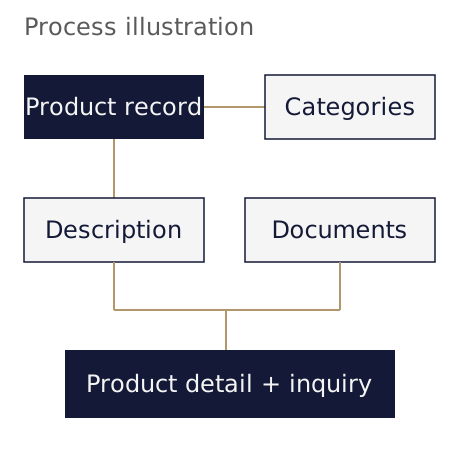


The Working Brief
Team Lab’s specialty-product catalog began with source material that needed substantial preparation for the web. Product records lacked a consistent import structure, and many descriptions were incomplete. Customers needed ways to find a product by category, application or the problem they were trying to solve, then reach its detail and quote-request information.
InterSculpt organized the source content and directed the design. Team Lab supplied product information, search language and corrections. A freelance front-end specialist implemented the visual build alongside InterSculpt’s product-data and migration work. The catalog required coordination between the client’s knowledge of its products and the structure used to display them.
The work continued through design approval, content review and launch. Client review affected product descriptions, category placement and the order in which products appeared. Those decisions reached beyond the homepage into product listings and individual records.
Production Decisions
A Shared Product Structure
InterSculpt consolidated source SKU lines into product records that could be imported and maintained consistently. Each record connected product information with categories and supporting documents. A product could belong to more than one category, allowing the same record to appear in the relevant catalog groupings.
The product-detail template gave those records a common presentation. Category membership and product descriptions remained separate pieces of information: changing where a product appeared did not require treating it as a new product. This mattered when the client later reviewed the groupings and requested corrections.
The initial content work also exposed missing descriptions and unanswered product questions. Team Lab remained the source of product facts. InterSculpt worked from the supplied material and returned questions for review where the record needed clarification.
Delivery RecordThe delivered catalog includes structured product details, category navigation and quote-request paths.
The Buyer’s Search Language
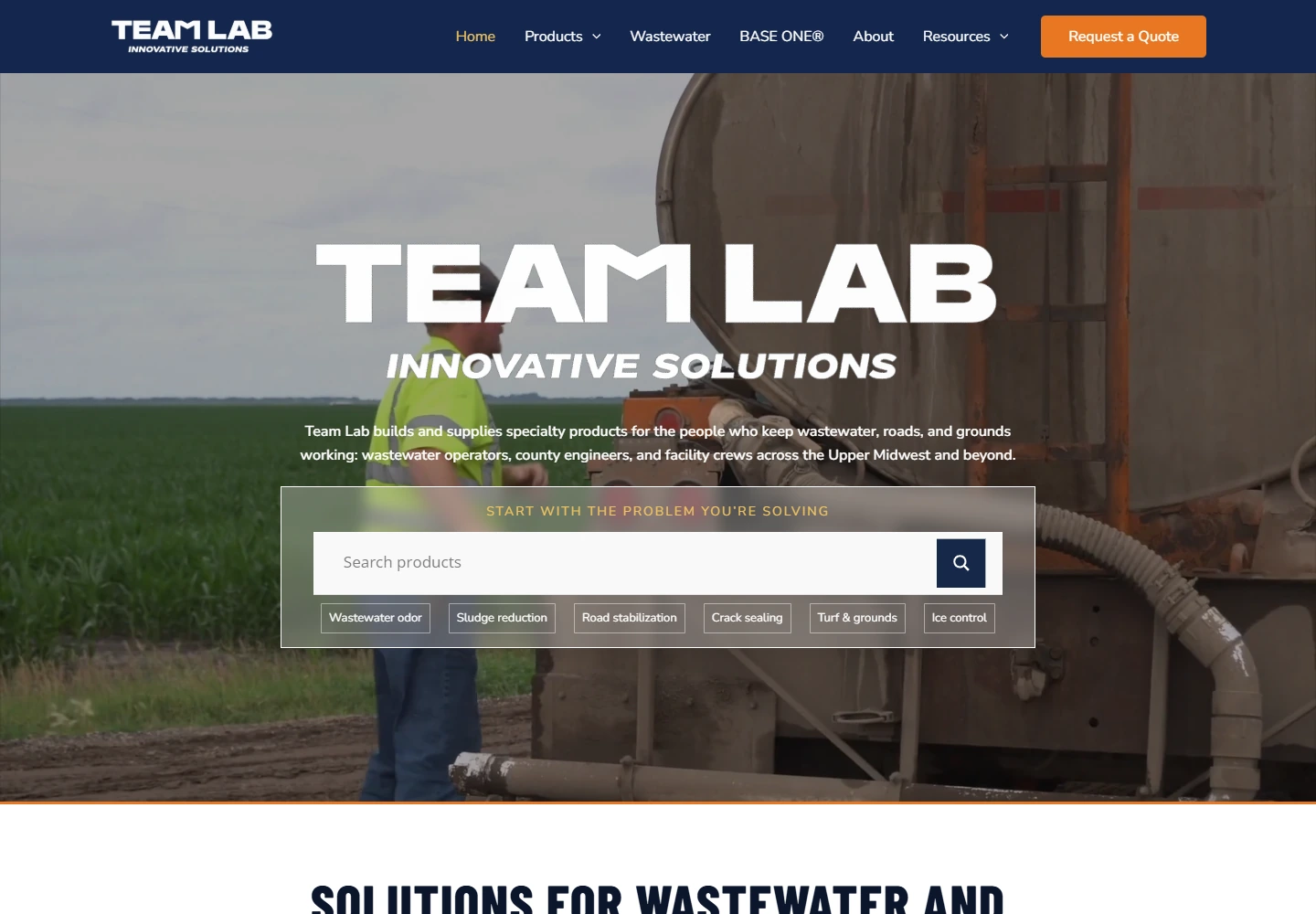
Technical product names were one entry point. The client also supplied phrases customers use to describe a task or problem. Those terms informed the catalog’s search synonyms and problem-language layer, connecting customer language with the product records.
The client’s terms were incorporated into the staging catalog before launch. Search and category browsing addressed different starting points: a customer might know a product name, know its application or have only a description of the problem. The catalog design provided entry points for those different levels of familiarity.
Delivery RecordThe homepage captured on October 5, 2026 shows product search, categories and problem-oriented entry points.
Product Order and Category Corrections
Team Lab’s launch approval included a request to change product ordering. Subsequent review established product-number order as the baseline, with the client able to identify best sellers for placement ahead of that sequence. InterSculpt applied SKU ordering across product lists, including filtered results and search results.
Category review also exposed an overlapping label used in different parts of the catalog. InterSculpt removed the duplicate issue grouping, retained the subcategory and redirected the retired archive to the retained destination. That correction addressed the category structure as well as the visible label.
These changes belonged to the catalog’s everyday operation. A sorting rule had to hold when a visitor changed a filter or arrived through search, and a retired category still needed a destination for an existing link.
Delivery RecordPost-launch records document SKU ordering and the correction of a duplicated catalog grouping.
Descriptions and Short Product Copy
Product review included the short callouts used beneath product identifiers and in catalog cards. InterSculpt rewrote callouts against their source descriptions after finding claims that earlier review had removed from the longer copy. Incomplete short descriptions were also revised.
The same short field appeared in search excerpts and other summaries. A correction therefore needed to reach each use of that field. Editing only the full product description would have left inconsistent claims elsewhere in the catalog.
Client workbooks gathered outstanding product questions for further review. The client continued to decide product facts and preferred placement while InterSculpt applied the confirmed changes to the shared records.
Delivery RecordThe post-launch content pass revised product callouts from source bodies and assembled client review workbooks.
Document Access Through Migration
The existing PDFs remained part of the catalog. InterSculpt preserved their original paths during migration and included redirects for changed website destinations. The cutover checks covered existing document links alongside the new navigation.
The release also required checking the published addresses and search configuration after the domain moved. Product content, downloadable documents and quote-request information each had to remain reachable through the change.
Delivery RecordThe September 14, 2026 cutover included document-path preservation, redirect checks and checks of published catalog URLs.
The Delivered Work
Team Lab’s website cut over on September 14, 2026. The delivered work brought structured product records, category and problem navigation, product details and quote-request paths into the live catalog.
Content review continued after launch. Product ordering, category corrections and short-description revisions were applied as Team Lab supplied direction. The resulting catalog retained the existing PDF links while giving product information a shared structure for continued updates.
Practical Lessons
- Build and review a sample product record before styling the full catalog. Include its category memberships, short description, full description and document links so the client can see what must be supplied.
- Ask the sales team for actual customer search phrases. Check each phrase against the product source material before adding it to search, especially when it could imply an unsupported application.
- Review sorting in filtered lists and search results as well as the main catalog. Record how the client will identify products that need a different position.
- Inventory document URLs before migration and test the original addresses after cutover. Keep unresolved content questions in a client review list with an owner for each answer.
Project Contributions
Team Lab supplied product content, search terms and review decisions. InterSculpt handled content structuring, design direction, the data layer and migration work. A freelance front-end specialist implemented the visual build.